Heat Pump Water Heaters and our EcoTough Heat Pump: Efficient, Smart, and Cost-Saving
Water heaters are typically the second-largest energy user in a home, behind heating and cooling systems. Heat pump water heaters, including our EcoTough Heat Pump, provide a a highly efficient way to heat water while significantly reducing energy consumption and lowering utility costs compared to traditional electric resistance water heaters.
To view our entire line of heat pump water heaters, visit https://noritz.com/product?heater_type=residential&heat_pump=NHP
A heat pump water heater (HPWH) is an energy-efficient water heating system that uses electricity to capture heat from the surrounding air and transfer it to the water. Unlike traditional electric resistance water heaters that generate heat directly, this process uses significantly less energy, making heat pump water heaters one of the most efficient water heating solutions available for homes.
Heat pump water heaters can be up to three times more energy efficient than standard electric resistance water heaters. Compared to traditional gas water heaters, HPWHs can be three to four times more efficient, since gas systems lose energy during the venting process.
Yes. Heat pump water heaters are designed to lower energy consumption, which can translate to annual energy savings of 15–24% in new single-family homes compared to gas storage water heaters. Actual savings may vary depending on installation conditions, climate, and hot water usage.
Many modern heat pump water heaters including our EcoTough Heat Pump offer advanced smart controls, allowing homeowners to customize operating schedules by day, week, or month. Some models also support mobile app connectivity, making it easy to monitor performance and adjust temperature settings remotely.
Yes. Gas water heaters emit greenhouse gases during operation. Heat pump water heaters operate on electricity, and as renewable energy sources such as wind and solar power become more common, HPWHs help significantly reduce emissions and environmental impact.
Heat pump water heaters are designed for long-term reliability, with many manufacturers offering 10-year warranties.
During a power outage, hot water may still be available depending on the home’s setup. When connected to solar panels or battery storage, hot water production can continue uninterrupted. A 120V heat pump water heater can also be powered by a portable generator, battery system, or compatible EV power source. Even without backup power, the tank will retain hot water until the stored supply is used, allowing continued use for a period of time.
When upgrading to a heat pump water heater, several factors should be considered. Always consult a qualified professional to ensure proper installation.
Location
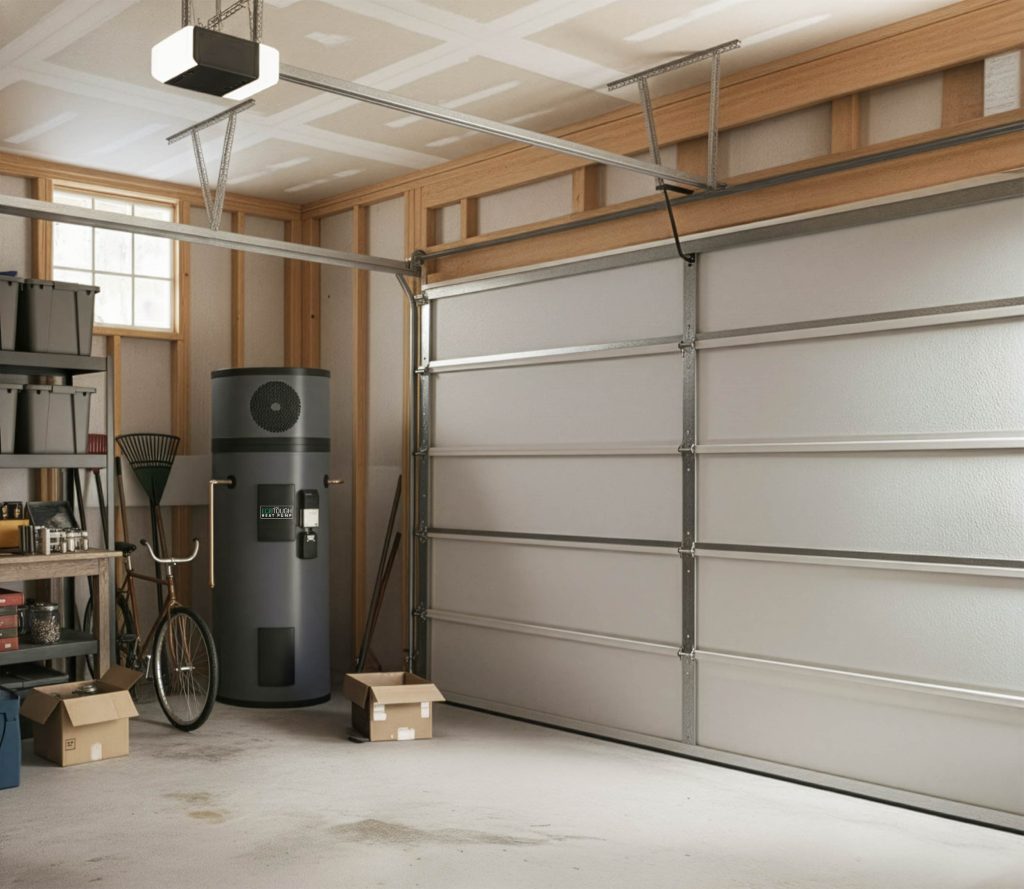
Many HPWHs can be installed in the same location as an existing electric or gas water heater using existing plumbing connections. Because the system pulls heat from the surrounding air, most models require about 1,000 cubic feet of air space, making garages and basements ideal installation locations.
Electrical Requirements
Some models require a dedicated 30-amp breaker and 240V electrical circuit, while 120V retrofit-ready heat pump water heaters are also available for easier installation.
Sizing
Heat pump water heaters often use larger storage tanks to maximize efficiency. For example, a household of three to four people that might use a 50-gallon gas water heater may benefit from an 80-gallon heat pump water heater, allowing higher hot water demand without switching to hybrid heating modes.
Sound Levels
Heat pump water heaters operate at low sound levels, typically around 45 decibels, similar to the background noise of a portable fan. When installed in garages or utility areas, most homeowners rarely notice the system running.